 Seafood
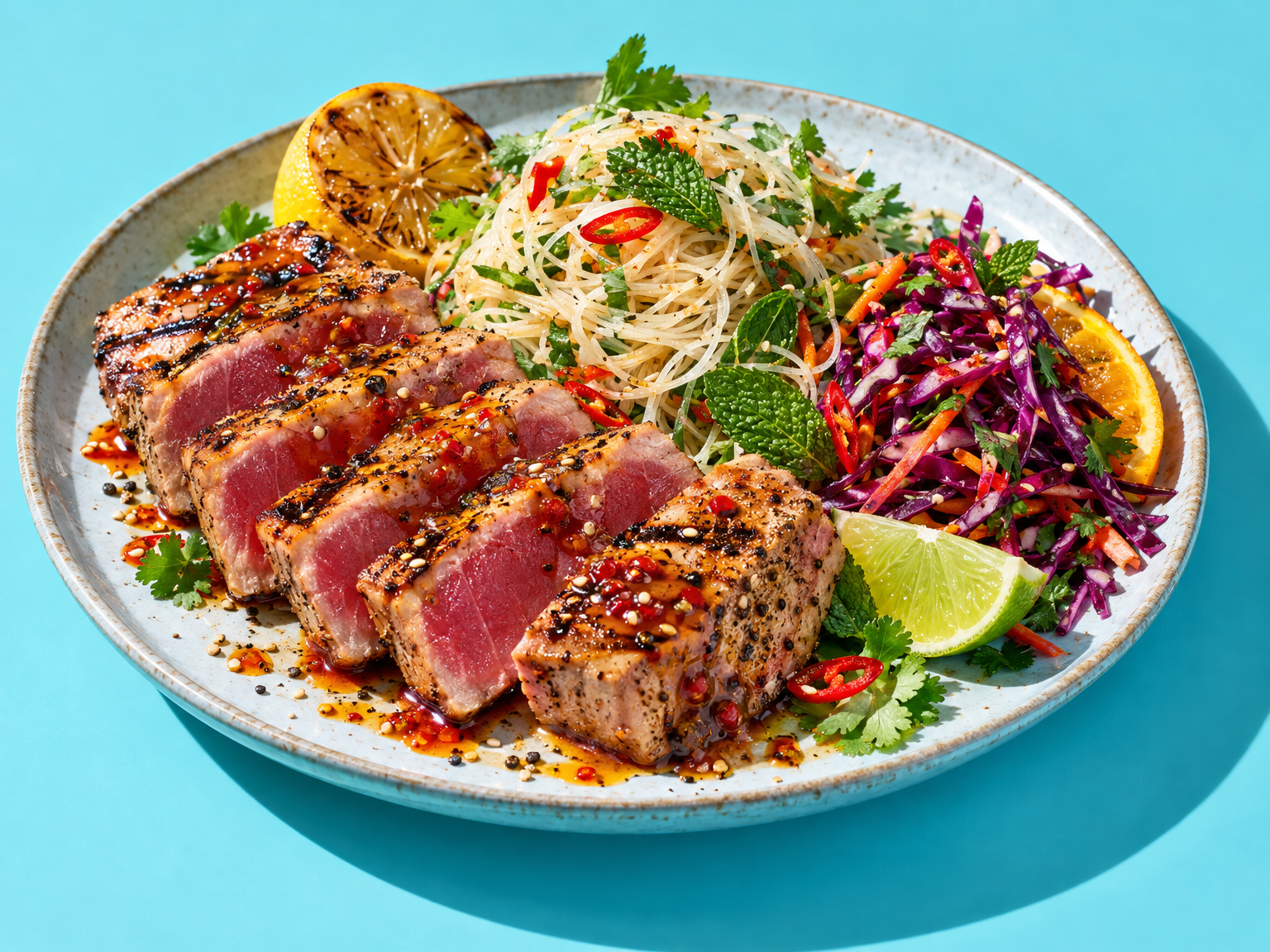
Citrus tuna tataki with vermicelli noodle salad and slaw
30 minEasy

Whole bream, punchy Scotch bonnet jerk paste and sizzling soapstone. Crisp-edged skin, juicy flesh and a proper lime finish.
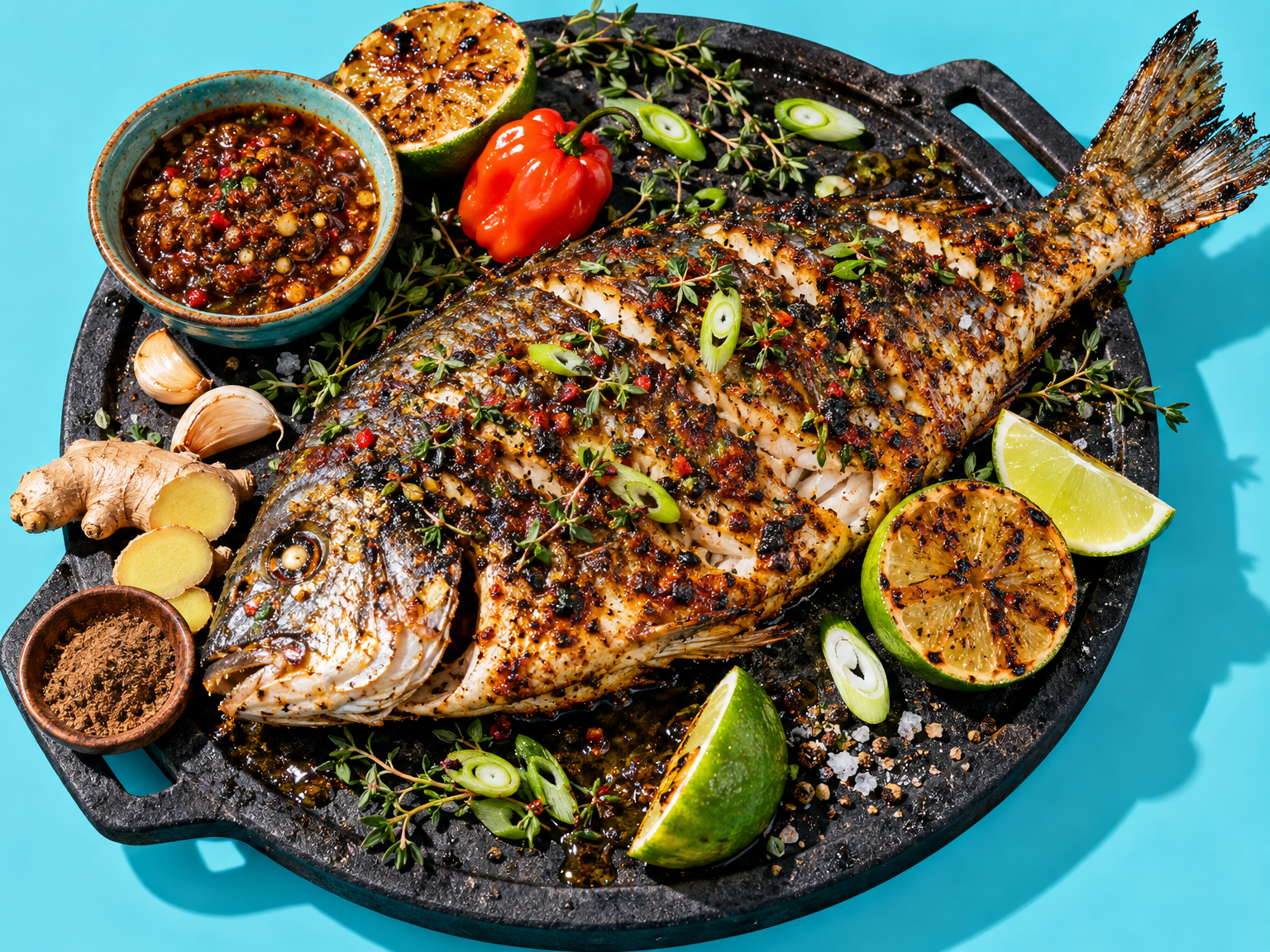
Right. Whole bream can take a bit of attitude. Scotch bonnet, allspice, thyme and lime bring the Jamaican-inspired jerk punch. The fish brings sweet, delicate flesh. Lovely contrast. The soapstone is your mate here. It gives the skin steady contact heat without dangling that spicy paste over naked flames. Keep the coating thin, let the fish release before turning, and leave the lid to do its job.
Light a modest bed of lumpwood charcoal in your kamado. Fit a dry, barbecue-rated soapstone on its proper support above the charcoal, following the manufacturer's setup instructions. Let it warm gradually as the cooker comes up to temperature. Stabilise at 200°C with the lid closed and allow roughly 30–40 minutes overall for lighting and preheating, separate from the cooking time. Make sure both fish will fit without crowding.
Blend all the jerk paste ingredients into a thick, finely chopped paste, scraping down the bowl as needed. Don't add water: a wet coating steams the skin and slows the browning. Wear gloves when handling the Scotch bonnet, then wash your hands and board.
Pat the fish thoroughly dry inside and out with kitchen paper. Make three diagonal cuts through the skin into the thickest flesh on each side, stopping short of the backbone. This gives the seasoning somewhere to sit without smothering the skin.
Divide the jerk paste between the fish, working it into the cuts and cavities. Smear only a thin film over the skin, scraping any thick clumps into the cavities instead. Brush the outside with a little of the oil reserved for the fish. Cook straight away; lime doesn't need hours to get acquainted with delicate fish.
Carefully crack the kamado lid open before lifting it fully. Using long tongs and folded kitchen paper, wipe the hot soapstone with a thin film of the remaining oil. Lay the bream on the stone with space between them. Close the lid and cook for 9–11 minutes without shuffling them about.
Slide a broad fish slice gently beneath each bream, using a second spatula to support it as you turn. If the skin grips the stone, give it another minute rather than tearing it free. Close the lid and cook the second side for 8–11 minutes. You want deep brown spice and crisp edges, not a black crust.
Start checking the fish after about 18 minutes of total cooking. Insert an instant-read thermometer into the thickest flesh just behind the head, avoiding the backbone. Aim for 63°C; the flesh should also be opaque and separate easily from the bone. Expect roughly 18–24 minutes overall, depending on the fish and the stone. If the coating darkens too quickly, finish on a raised rack over a drip tray away from direct heat.
Lift onto a warm platter and rest uncovered for 3 minutes. No tight foil tent: that traps steam and softens your hard-earned skin. Squeeze over the lime wedges and serve, warning everyone about the bones. Crunchy cabbage slaw and rice and peas make cracking company.
Technique: Griddle. Cook to 63°C internal. Rest for 3 min.
Seafood Seafood
 Seafood
 Pork
 Beef
 Fish
Fresh recipes, ridiculous ideas and everything worth cooking over fire — straight from me.